US Army tests self-driving Ford F-250 truck with drone-killing turret
The autonomous system is designed to target fast-moving drones within a range of 10 to 100 meters. It is part of Project Sandhills 2.0, an evolution of earlier military vehicle programs.
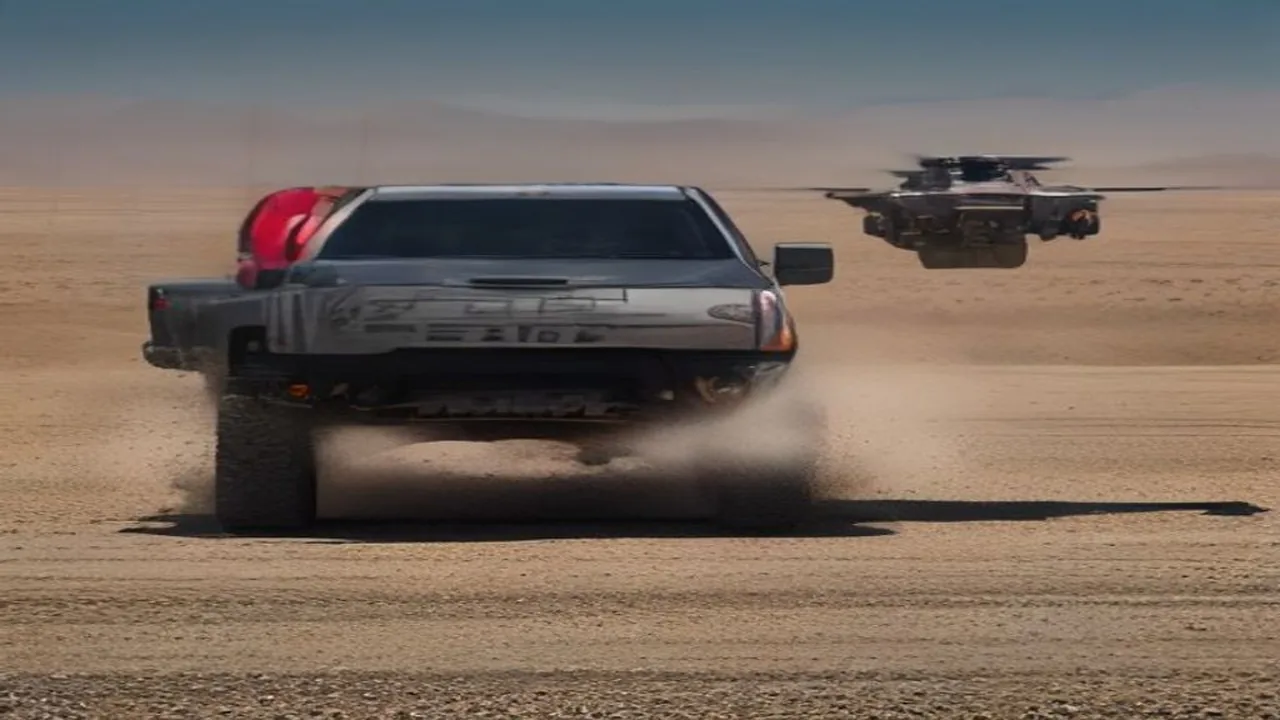
The US Army has begun testing a self-driving Ford F-250 truck equipped with a shotgun-powered drone-killing turret. This autonomous system is designed to detect and engage fast-moving drones within a range of 10 to 100 meters. The vehicle is part of Project Sandhills 2.0, which builds on an earlier initiative that produced the Lancer UGV, a vehicle shared with Ukraine. The system aims to enhance battlefield capabilities by neutralizing aerial threats in real time.
The development of this autonomous vehicle follows a long history of military innovation, dating back to the 1925 Geneva Protocol, which banned the use of chemical and biological weapons. More recently, the Chemical Weapons Convention of 1993 further restricted the use of such weapons. The new system represents a shift toward autonomous counter-UAS (C-UAS) technologies, which are increasingly seen as critical for modern warfare.
The turret on the Ford F-250 is capable of firing at drones within a range of 10 to 100 meters. This capability is part of a broader effort to develop autonomous systems that can operate in high-threat environments. The project is led by Edda, a company specializing in autonomous vehicle technology. The system is being tested as part of a larger initiative to integrate advanced weaponry with self-driving platforms.
The deployment of autonomous systems like this one raises questions about cost, governance, and vendor lock-in. Military programs often require significant investment, and the integration of autonomous technologies can lead to long-term dependencies on specific vendors. Additionally, the use of such systems may require new regulatory frameworks to ensure they are used responsibly and in compliance with international laws.
The US Army's test of the self-driving Ford F-250 with a drone-killing turret is still in development. The system is not yet operational, but it represents a significant step forward in autonomous military technology. As the project progresses, further testing and refinement will be necessary to ensure its effectiveness and reliability in real-world scenarios.